How Percy Jackson Books Transform Mythology Education for Kids
When a sixth-grader can rattle off the differences between Hades and Thanatos but struggles to remember who fought in the Revolutionary War, you’re witnessing something remarkable. Rick Riordan’s Percy Jackson series has accomplished what decades of traditional mythology curricula couldn’t: it’s made ancient stories feel urgent and relevant to today’s students.
The question isn’t whether kids are reading Percy Jackson—over 180 million copies sold worldwide suggest they are. The question is whether educators and parents should lean into this phenomenon or treat it as mere entertainment. The evidence suggests the former, and the implications reach far beyond simply getting kids excited about Greek gods.
The Gateway Effect: Making Ancient Texts Accessible
Percy Jackson succeeds where traditional mythology education often falters by removing the intimidation factor. When you hand a student Edith Hamilton’s Mythology or Thomas Bulfinch’s The Age of Fable, you’re asking them to navigate archaic language, unfamiliar cultural contexts, and stories that can feel disconnected from their lived experience.
Riordan’s books function as translators. They present the same stories—the same heroes, monsters, and moral dilemmas—through the lens of a contemporary protagonist dealing with recognizable problems: divorced parents, learning differences, feeling like an outsider. Students who read about Percy’s encounter with Medusa are more likely to seek out the original Perseus myth. They’ve already internalized the narrative framework; now they’re curious about the source material.
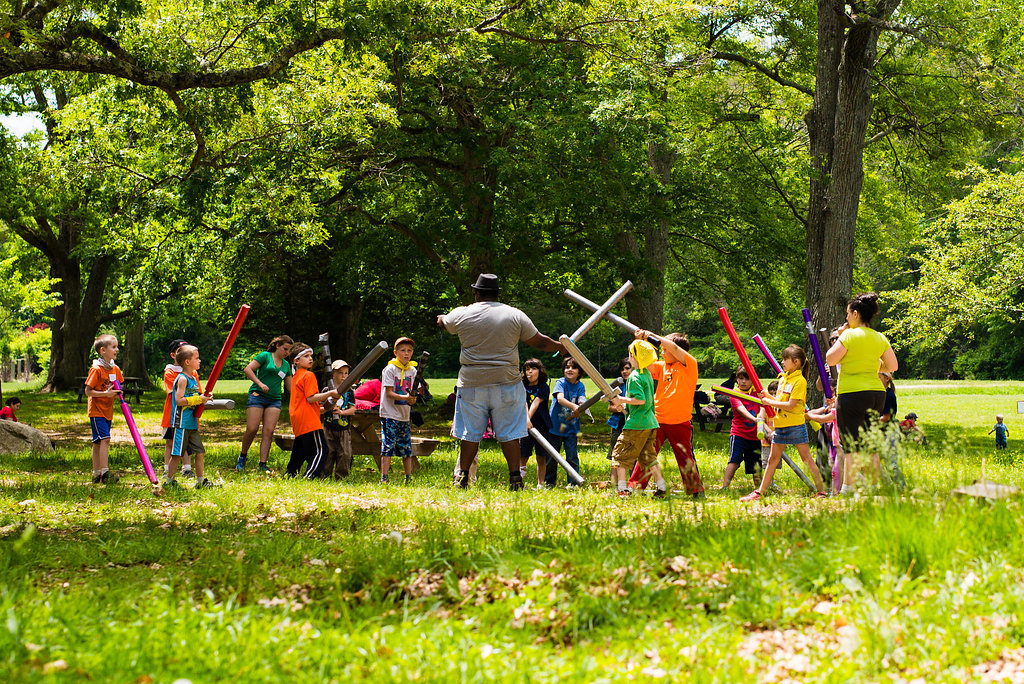
In our Camp Mythos programs here in Fall River, we’ve seen this gateway effect firsthand. Students arrive knowing Percy Jackson’s version of the Minotaur; by the end of camp, they’re debating the symbolism in Theseus’s original myth and drawing connections to modern labyrinths—both literal and metaphorical. The books provide the hook; quality instruction reels in the deeper learning.
Dyslexia Representation and Neurodivergent Empowerment
Riordan’s decision to make Percy dyslexic wasn’t just inclusive—it was pedagogically brilliant. By framing dyslexia as “your brain is hardwired for ancient Greek” rather than a deficit, the books recontextualize learning differences as sources of strength.
This representation matters profoundly for struggling readers. Students who associate reading with frustration suddenly see themselves in a heroic protagonist. The books validate their experience while demonstrating that challenges don’t preclude achievement. Percy’s ADHD becomes an asset in battle, allowing him to process multiple threats simultaneously.
For educators, this opens conversations about different types of intelligence and learning styles. A mythology curriculum built around Percy Jackson creates natural entry points for discussing how ancient oral traditions served preliterate societies, how dyslexic thinkers often excel at spatial reasoning and big-picture thinking, and how challenges can become advantages depending on context.
We structure our mythology programming to honor different learning pathways. Some students absorb material through traditional reading and discussion. Others need to embody the myths physically, solving puzzles as Odysseus or facing monsters in collaborative challenges. Percy Jackson legitimizes these varied approaches by showing that the hero himself doesn’t fit the “typical” student mold.
Moral Complexity and Character Development
Ancient mythology doesn’t traffic in simple good-versus-evil narratives. The gods are petty, vindictive, and flawed. Heroes make catastrophic mistakes. Victory often comes with unbearable costs. This moral ambiguity makes mythology an exceptional vehicle for developing critical thinking and ethical reasoning.
Percy Jackson maintains this complexity while making it digestible for middle-grade readers. Percy lies to his friends with good intentions. He makes decisions that endanger others while trying to do the right thing. The gods he serves aren’t purely benevolent. Students reading these books learn to sit with uncomfortable contradictions—a crucial skill for navigating real-world ethical dilemmas.
Traditional mythology curricula sometimes sanitize these elements or present them as historical artifacts. Riordan’s books make the moral questions visceral and immediate. When Percy must choose between saving his mother and preventing a war, students understand the weight of that choice because they’ve invested in both outcomes.
In our tabletop programs like Mythos Academy Tabletop, we extend these conversations into collaborative storytelling. Players face Percy Jackson-style dilemmas where there’s no clear right answer, only choices with different consequences. They learn that heroism often means choosing between imperfect options—a lesson the original myths taught but that modern retellings make accessible.
Cross-Curricular Connections
A robust Percy Jackson curriculum doesn’t stay confined to English class. The books create natural bridges to history, geography, psychology, and even science.
Ancient geography comes alive when Percy and his friends crisscross the United States visiting mythological sites. Students can map these locations, research how Greek and Roman settlements influenced Western architecture, and explore how mythology shaped the naming of cities, planets, and constellations. The Labyrinth beneath Manhattan connects to discussions of urban infrastructure and archaeological preservation.
Psychology and sociology emerge through the books’ exploration of family dynamics, friendship, loyalty, and identity formation. Percy’s relationship with his absent father mirrors countless students’ experiences while also illuminating how ancient Greeks understood divine-mortal relationships. The series’ treatment of prophecy and fate opens discussions about determinism versus free will.
The books even touch on marine biology and environmental science through Percy’s connection to water and his father’s domain. Students might research ocean ecosystems, learn about mythological creatures’ real-world analogues, or explore how ancient cultures understood natural phenomena through mythological frameworks.
Building Research and Analytical Skills
Here’s where Percy Jackson becomes more than entertainment—it becomes a research methodology. Students who arrive excited about the books are primed to dig deeper. That enthusiasm transforms into genuine scholarly inquiry when you provide the right scaffolding.
Start by asking students to identify differences between Riordan’s versions and the original myths. This requires research, comparison, and critical analysis. Why did Riordan change certain details? What modern sensibilities influenced his adaptations? Which elements remained consistent across versions?
Students can trace mythological references through other media—film adaptations, video games, graphic novels—and analyze how different creators interpret the same source material. They learn that myths aren’t static texts but living stories that evolve with each retelling.
For more advanced students, examine how Riordan blends multiple mythological traditions. The series incorporates Roman, Greek, Egyptian, and Norse mythologies, creating opportunities to compare cultural approaches to similar themes. How do different cultures explain creation? What role do trickster figures play across traditions? How do underworld myths reflect cultural attitudes toward death?
This comparative mythology work develops research skills, cultural competency, and the ability to synthesize information from multiple sources—exactly what college-level humanities courses demand.
Community and Collaboration Through Shared Narrative
One underappreciated benefit of Percy Jackson-based curricula is how the books create instant community. Students who’ve read the series share a common language and reference points. Inside jokes about blue food or claims to godly parentage become ways of building connection and signaling belonging.
This shared narrative foundation is particularly valuable in diverse classrooms where students may have vastly different cultural backgrounds and prior knowledge. Percy Jackson provides common ground—a set of stories and characters everyone can access regardless of their previous exposure to Western mythology.
In group work, students naturally self-organize around the series’ themes. A project on Greek architecture might split into teams representing different gods’ temples. A debate about justice could frame itself around Camp Half-Blood’s tribunal system. Students who might otherwise struggle to engage with abstract concepts find purchase when those concepts are embodied in familiar characters and situations.
We’ve seen this community-building power extend beyond individual classrooms. Students who participate in our mythology programs often maintain friendships long after camp ends, united by their shared immersion in these stories. That’s the power of narrative to create belonging—something the original myths did for ancient communities and that Percy Jackson replicates for modern students.
Practical Implementation Strategies
If you’re considering incorporating Percy Jackson into your mythology curriculum, start with clear learning objectives. What do you want students to understand about ancient mythology? How does Percy Jackson serve those goals rather than replace more traditional sources?
Consider a scaffolded approach: begin with Percy Jackson to generate excitement and provide narrative structure, then gradually introduce primary sources. After students read The Lightning Thief, assign excerpts from Homer’s Odyssey or Ovid’s Metamorphoses. They’ll approach these texts with context and curiosity rather than intimidation.
Create projects that require students to move beyond the books. Challenge them to write their own myths featuring modern demigods, research how their local area connects to mythology (Fall River’s maritime history, for instance, offers rich connections to sea gods and monsters), or analyze how contemporary issues might be reflected in ancient stories.
Don’t forget multimedia approaches. The Percy Jackson graphic novel adaptations work beautifully for visual learners. The films, while imperfect, offer opportunities for media literacy discussions about adaptation choices. Students might create their own visual interpretations or design video game levels based on mythological challenges.
Looking Beyond the Page
The strongest Percy Jackson curricula recognize that the books are tools, not endpoints. They’re remarkably effective tools—engaging, accessible, and pedagogically sound—but the goal remains helping students understand why mythology matters.
These ancient stories grapple with timeless human questions: What defines a hero? How do we face our fears? What responsibilities come with power? How do we honor our families while forging our own paths? Percy Jackson makes these questions concrete and urgent for young readers, but the original myths contain depths worth exploring.
If you’re looking for ways to extend mythology education beyond the classroom, programs like our Mythos Academy Letters help students continue engaging with mythological themes through creative writing and collaborative storytelling. The key is maintaining the spark that Percy Jackson ignites while gradually building students’ capacity for deeper analysis and appreciation of the source material.
The Percy Jackson phenomenon isn’t a threat to serious mythology education—it’s the most powerful recruitment tool mythology studies has had in generations. The question isn’t whether to use these books, but how to use them wisely.