How to Choose the Right Educational Program for Your Child
You’ve spent the afternoon scrolling through program websites, each one promising to unlock your child’s potential. One emphasizes STEM skills. Another touts outdoor adventure. A third guarantees college prep. Your child sits nearby, equally unenthused about all of them, and you’re left wondering: how do you know which program actually fits?
The paradox of choice hits hardest when you’re trying to support your child’s growth. Unlike academic requirements where the path feels predetermined, enrichment programs exist in a vast landscape of possibilities. You want something meaningful—not just childcare with a fancy name. But with limited time and resources, the wrong choice means more than wasted money. It means a missed opportunity during a formative window.
This challenge intensifies in communities like Fall River and the surrounding Southeastern Massachusetts area, where families juggle work schedules, transportation logistics, and the genuine desire to give kids experiences that school alone can’t provide. The question isn’t whether your child needs enrichment—it’s how to identify what will actually resonate.
Start With Your Child’s Natural Inclinations
Before you evaluate a single program, observe how your child naturally spends unstructured time. Do they immediately reach for books, creating elaborate stories with their toys? Do they build intricate structures, whether with blocks or couch cushions? Are they constantly moving, needing physical outlets for their energy?
These patterns reveal learning preferences that matter more than any personality quiz. A child who creates detailed fantasy worlds in their bedroom will engage differently than one who prefers organizing collections or one who learns through physical experimentation. The most enriching program isn’t the most prestigious—it’s the one that amplifies what already sparks curiosity.
Pay attention to how your child processes challenges too. Some kids thrive when given clear rules and structures, finding comfort in knowing exactly what’s expected. Others need open-ended exploration, resisting anything that feels too prescribed. Neither approach is better, but forcing a structure-loving child into completely unguided activities (or vice versa) creates frustration rather than growth.
Consider also your child’s social comfort level. This isn’t about labeling them as “shy” or “outgoing”—it’s about understanding how they recharge and connect. Some kids draw energy from large groups and collaborative chaos. Others engage more deeply in smaller settings where they can form meaningful connections without sensory overload. The right program size and structure can make the difference between a child who dreads Tuesdays and one who counts down the days.
Match the Format to How They Learn
Educational programs come in wildly different formats, and the delivery method matters as much as the content. Traditional classroom-style enrichment works beautifully for some learners but leaves others disengaged. Understanding your child’s learning style helps you look past marketing language to the actual experience.
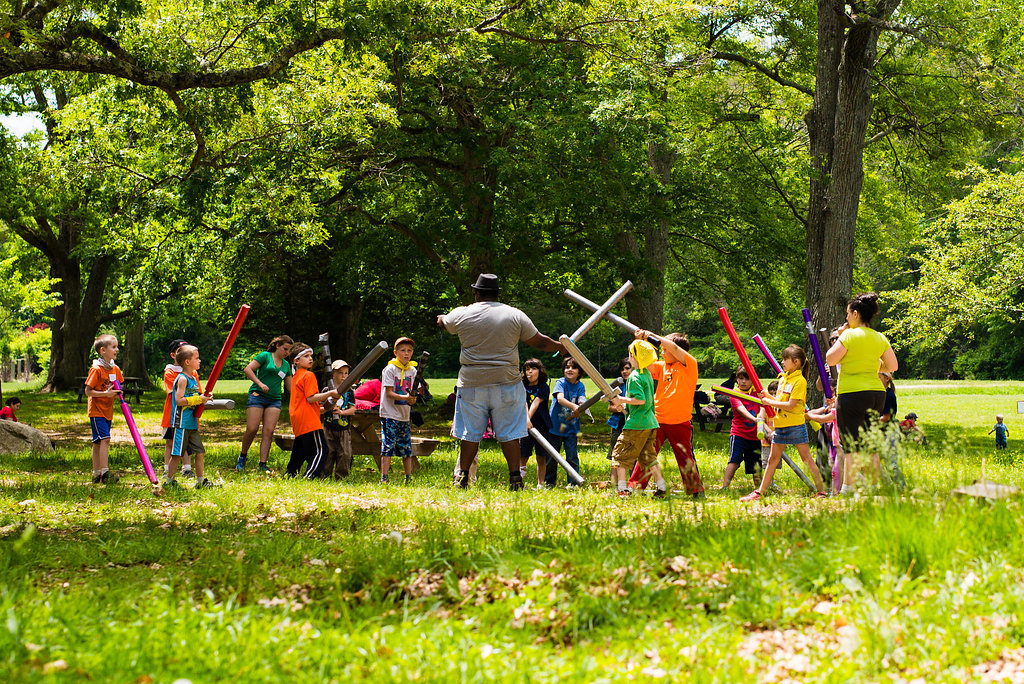
Kinesthetic learners—kids who process information through movement and doing—often struggle in lecture-based formats. They’re not being difficult when they can’t sit still through a presentation. Their brains literally need physical engagement to process new concepts. For these kids, programs built around action and embodied learning create breakthrough moments. Quest! Live Roleplaying and similar immersive formats let these learners solve problems while moving through space, using their bodies as thinking tools.
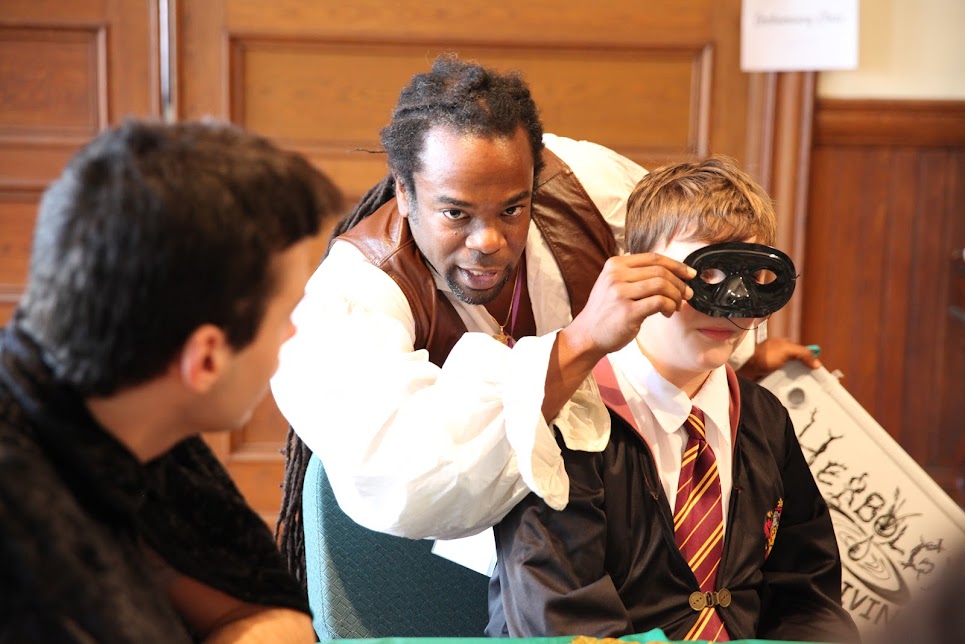
Visual and spatial learners need to see the big picture before diving into details. They excel when they can map relationships, visualize outcomes, and understand how pieces fit together. These kids benefit from programs that use props, visual storytelling, and spatial reasoning challenges. They’re the ones who’ll remember an entire mythology unit because they held the “artifacts” and arranged them in meaningful patterns.
Narrative-based learners organize information through stories and emotional connections. Facts stick when embedded in compelling contexts. For these children, programs that weave learning into ongoing stories—where history becomes lived experience or science concepts emerge through quest objectives—transform retention from a struggle into something natural.
Consider the Social and Emotional Environment
Academic enrichment matters, but the social ecosystem of a program shapes your child’s experience just as much. The best content in the world falls flat if your child feels unsafe, excluded, or perpetually compared to peers.
Look for programs that explicitly address social-emotional learning, not as an add-on but as foundational. This doesn’t mean every activity needs a feelings circle. It means the program structure naturally creates opportunities for collaboration, conflict resolution, and perspective-taking. Well-designed group challenges, team-based problem solving, and role-playing scenarios let kids practice social skills in lower-stakes contexts than the cafeteria.
Pay attention to how programs handle competition and success. Some kids thrive in competitive environments, using external benchmarks to push themselves. Others shut down when they feel ranked or compared. Neither response is wrong, but mismatching a child’s motivational style to a program’s culture breeds anxiety. Ask program directors how they balance challenge with support, how they define success, and what happens when a child struggles.
The instructor’s approach to mistakes and failure tells you everything about a program’s emotional environment. Do they treat errors as catastrophes to avoid or as information to use? Kids who fear judgment stop taking intellectual risks. Those who see mistakes as normal parts of learning stay curious longer. During school vacation weeks or summer programs, this becomes especially important—you want your child building confidence, not burning out.
Evaluate the Long-Term Developmental Arc
One-off workshops serve a purpose, but sustained engagement allows skills to actually develop. Look for programs that build progressively, where kids can return and deepen their understanding rather than repeating the same introductory experience.
This doesn’t mean committing to a year-long program before you know if it fits. But it does mean asking: if my child loves this, can they grow within it? Do returning participants take on new roles, tackle more complex challenges, or mentor newcomers? Programs with developmental pathways let kids build mastery and identity over time.
Consider also whether the skills transfer beyond the immediate activity. The best enrichment programs teach specific content while building transferable competencies—critical thinking, creative problem-solving, communication, collaboration, and self-regulation. A mythology program that only teaches myths misses the opportunity. One that uses mythology as a vehicle for developing narrative thinking, ethical reasoning, and collaborative storytelling creates tools kids use everywhere.
For adolescents especially, look for programs that offer appropriate autonomy and agency. Middle schoolers need opportunities to make meaningful choices, contribute ideas, and see their decisions matter. Programs that still treat them like elementary students miss this developmental need. Those that scaffold independence while maintaining clear boundaries help them practice adult-like thinking in safe contexts.
Factor in Practical Realities Without Compromising Fit
The perfect program means nothing if logistics make it impossible. But be careful not to let convenience override developmental fit entirely. Finding the balance requires honest assessment of your family’s constraints and creative problem-solving.
Transportation and scheduling matter, particularly in areas like Fall River where families may be managing multiple children’s activities across different locations. A program twenty minutes away might feel impossible on a Tuesday evening but perfectly manageable during February vacation. Be realistic about what you can sustain, but also consider whether some schedule reshuffling might open up better options.
Cost deserves straightforward consideration. Many families stretch budgets to give kids enriching experiences, but financial stress defeats the purpose. Look for programs with sliding scale options, scholarship availability, or sibling discounts. Some organizations structure pricing to ensure accessibility rather than maximizing revenue. Don’t assume a program is out of reach without asking about financial options.
Consider whether your child needs a program that accommodates specific learning differences or support needs. The best enrichment happens when kids don’t have to mask or suppress parts of themselves to participate. Programs that welcome neurodivergent learners, provide sensory-friendly options, or adapt activities for different physical abilities create space for kids who often feel like square pegs elsewhere.
Trust Your Child’s Response Over Your Expectations
Perhaps the hardest part of choosing enrichment programs: separating what you think your child should love from what actually lights them up. You might envision them as a future engineer, but they’re drawn to storytelling. You hoped they’d join the sport you loved, but they want to explore mythology.
Watch for genuine engagement versus compliance. A child who participates because they know you want them to shows up differently than one who’s intrinsically motivated. Neither is bad, but only one builds lasting curiosity. If your child tries a program and it doesn’t click, that’s valuable information rather than failure.
Sometimes kids surprise themselves. A reluctant participant in Camp Mythos discovers they love collaborative world-building. A child who insisted they hated writing finds their voice through character-driven narratives. The right program doesn’t force change—it reveals capacities the child didn’t know they had.
Give programs enough time to work. One difficult session doesn’t mean wrong fit, especially if your child tends toward initial resistance with new situations. But persistent disengagement or growing reluctance signals misalignment. Trust both the patterns and your child’s feedback.
Finding What Actually Fits
Choosing the right educational program requires you to act as both researcher and interpreter—gathering information while reading your specific child’s needs. The program that transforms one kid might bore another. What matters isn’t finding the objectively “best” option but identifying what matches your child’s current developmental moment.
If you’re looking for programming that meets kids where they are—honoring different learning styles, building social-emotional skills alongside academic ones, and creating space for genuine curiosity—reach out. Whether during summer, school breaks, or year-round programming, the right fit makes all the difference between obligation and opportunity.