Developing Leadership Skills Through Adventure-Based Learning
You’ve probably watched your child navigate group projects at school with frustration. One kid dominates every decision. Another refuses to participate. Someone else tries to help but gets talked over. When the project finally limps across the finish line, nobody feels good about the process, and your child hasn’t learned much about working with others toward a shared goal.
Traditional classroom environments offer limited opportunities for genuine leadership development. The structures are rigid, the stakes feel artificial, and the same handful of students tend to raise their hands every time. Meanwhile, the quieter kids—the ones who might lead brilliantly given the right context—remain invisible in the back row.
Adventure-based learning flips this dynamic entirely. When young people step into scenarios that demand collaboration, creative problem-solving, and shared responsibility for outcomes that matter to them, something remarkable happens. Leadership emerges not from assigned roles or teacher selection, but from authentic need and genuine capability.
Why Traditional Leadership Training Falls Short for Youth
Most leadership curricula designed for young people rely heavily on lectures, worksheets, and abstract concepts. Students learn definitions of leadership styles. They might discuss historical leaders or complete personality assessments. These approaches aren’t necessarily bad, but they’re disconnected from the lived experience of actually leading.
The problem intensifies when programs try to manufacture leadership opportunities through artificial designations. Rotating the “team captain” role or assigning a “project manager” for a group assignment creates a leadership-shaped box that many kids simply can’t fit into. The extroverted, academically confident students step into these roles naturally. Everyone else learns that leadership isn’t for them.
Real leadership development requires contexts where the need for leadership arises organically, where different types of leadership matter at different moments, and where failure carries real consequences within a safe container. You can’t lecture someone into confident decision-making under pressure. They need to practice it.
How Adventure Creates Natural Leadership Opportunities
Adventure-based learning—whether through live-action role-playing, collaborative challenges, or narrative-driven quests—creates scenarios where leadership becomes necessary rather than assigned. When a group of kids needs to plan an approach to a complex challenge, defend their community from a mythological threat, or negotiate with another faction to achieve their goals, someone needs to step up. Often, multiple people need to step up in different ways.
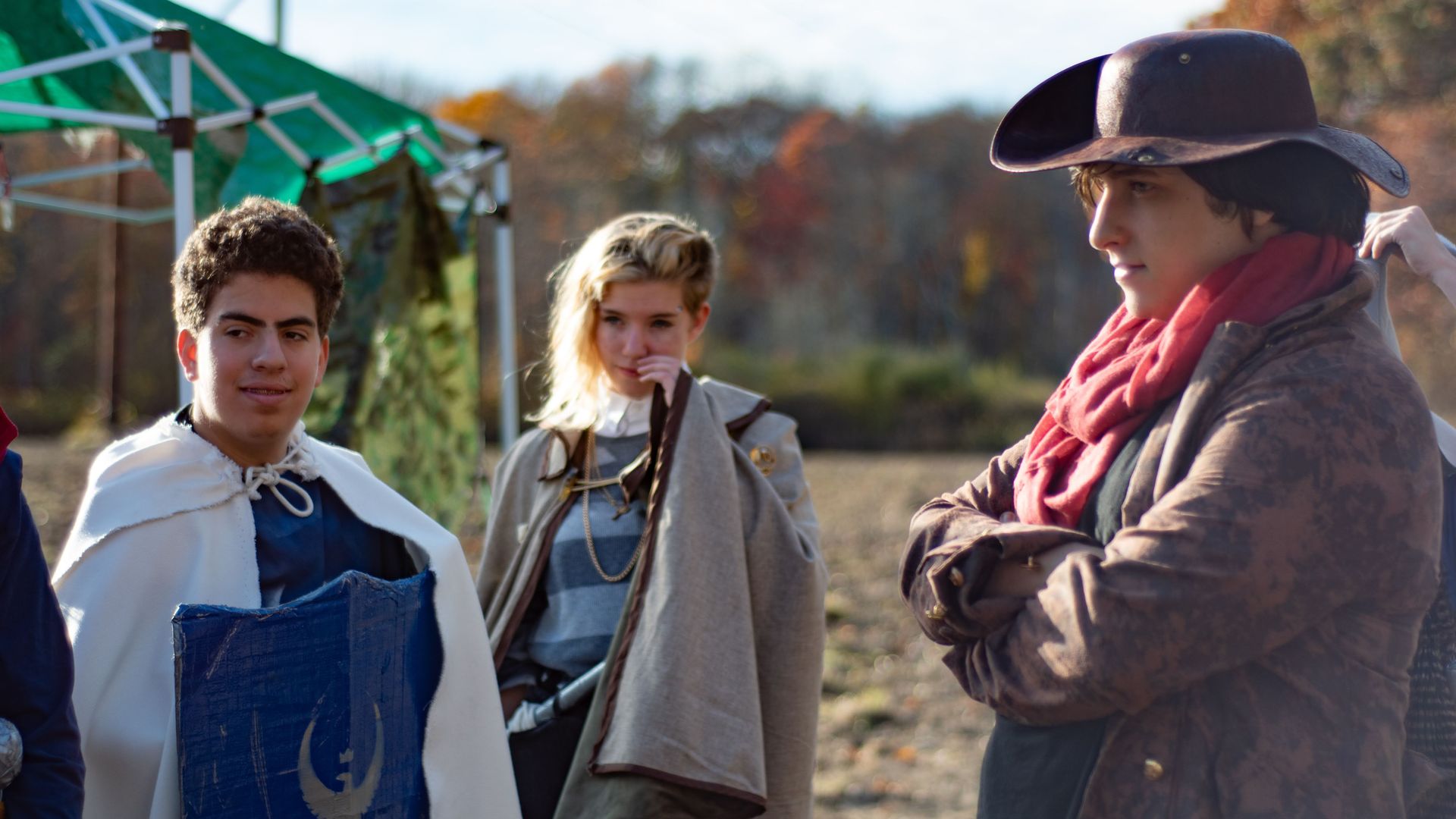
In our Quest! Live Roleplaying program, we watch this unfold every session. A quiet twelve-year-old who rarely speaks up in class suddenly becomes the strategic genius planning the group’s defense. A kid who struggles academically emerges as the natural diplomat, building consensus and preventing conflicts. The traditional “leader type” might discover they’re actually better at supporting others than directing them.
These shifts happen because adventure provides multiple leadership niches. There’s no single way to lead effectively when your group faces a dragon, needs to solve a complex puzzle, or must make a difficult ethical choice. The kid with strong spatial reasoning leads the navigation. The empathetic listener leads the emotional processing after a setback. The bold risk-taker leads the charge when decisive action matters most.
The Role of Failure and Consequence in Leadership Growth
Here’s what separates adventure-based leadership development from more conventional approaches: failure is part of the process, and it matters. Not in a traumatic, high-stakes way, but in a way that creates genuine learning.
When a student makes a poor leadership decision in a classroom discussion, the consequence is typically nothing. Maybe they get a gentle correction from the teacher. Maybe nothing happens at all. But when a character in a live-action scenario makes a poor decision, the fictional consequences ripple through the narrative. The group might lose access to resources they needed. They might alienate an ally. They might face a more difficult challenge as a result.
These consequences create a feedback loop that abstract lessons can’t replicate. Young people learn that leadership decisions matter. They learn to consider multiple perspectives before acting. They learn to acknowledge mistakes, adjust their approach, and try again. Most importantly, they learn that failure doesn’t define them—it teaches them.
The safety net remains crucial. We’re not throwing kids into genuinely dangerous situations or creating scenarios that damage real relationships. The consequences matter within the adventure context, which means students get authentic emotional investment without real-world harm. This balance allows for the kind of risk-taking that builds genuine confidence.
Collaborative Leadership vs. Traditional Hierarchical Models
One of the most valuable lessons that emerges from adventure-based learning is that leadership doesn’t have to be hierarchical. In fact, the most effective groups develop fluid leadership structures where different people lead different aspects of the challenge based on their strengths and the situation’s demands.
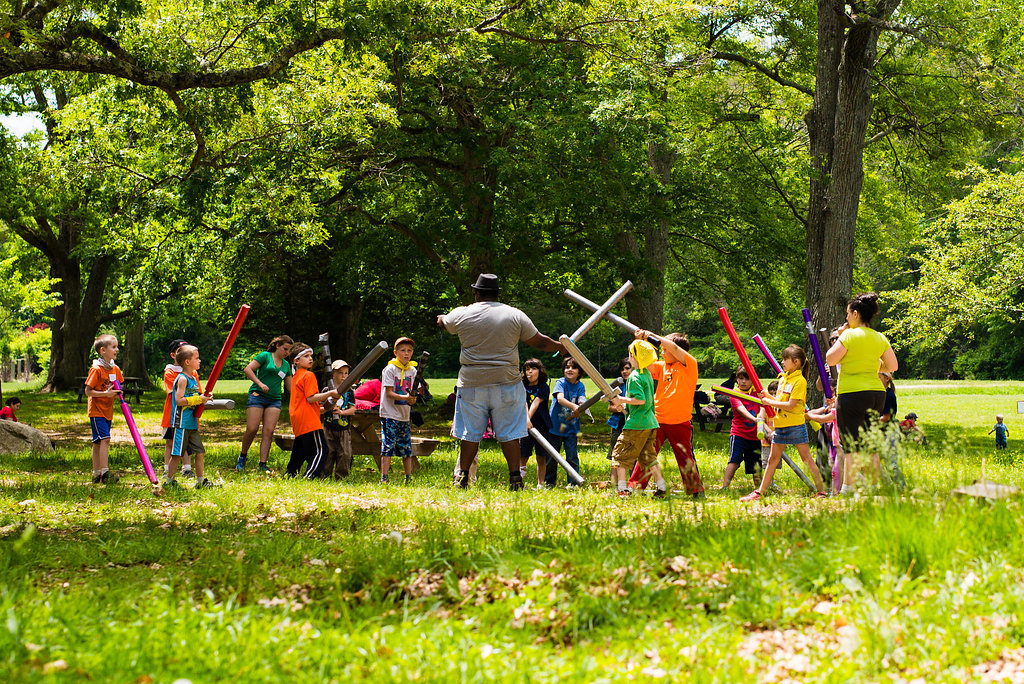
During a typical session at Camp Mythos, you might see leadership shift multiple times in a single afternoon. One camper leads the tactical planning for a capture-the-flag style challenge. Another leads the creative problem-solving when the group encounters an unexpected obstacle. A third leads the emotional support when someone feels discouraged. Nobody’s in charge of everything. Everyone’s in charge of something.
This model reflects how effective teams actually function in the real world far better than the “one leader, everyone else follows” approach that dominates most youth programming. Modern workplaces value collaborative leadership, distributed decision-making, and the ability to step up or step back as the situation requires. Adventure-based learning teaches exactly these skills.
Young people who experience this fluid leadership model start to understand their own leadership style more clearly. They recognize situations where they naturally excel and moments when supporting someone else’s leadership serves the group better. This self-awareness becomes foundational to effective leadership throughout their lives.
Building Communication Skills Through High-Stakes Scenarios
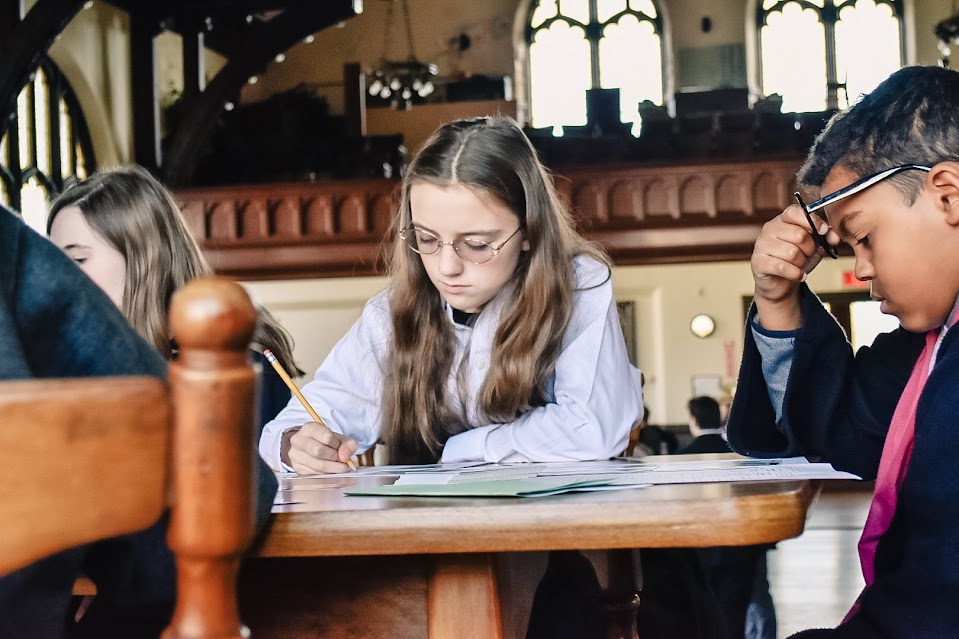
Leadership without communication is just bossiness. Adventure-based learning provides constant opportunities to practice the communication skills that make leadership effective: active listening, clear articulation of complex ideas, persuasive reasoning, and constructive feedback.
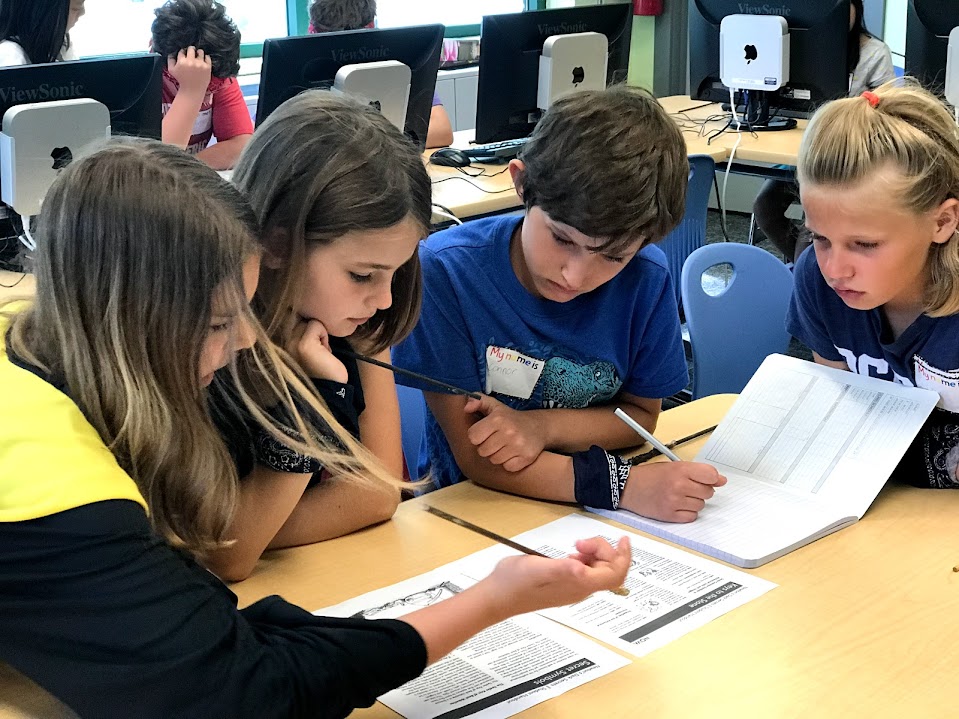
Consider what happens when a group of kids needs to coordinate their actions during a live-action challenge. They can’t succeed if only one person talks. They can’t succeed if nobody listens. They need to share information quickly and accurately, build on each other’s ideas, negotiate disagreements, and make collective decisions under time pressure. These aren’t skills you develop from a textbook chapter on communication.
The immersive nature of adventure-based programs raises the emotional stakes just enough to make communication practice meaningful. When your character’s goals depend on convincing another faction to cooperate, or when your group’s success requires everyone understanding a complex strategy, the motivation to communicate effectively comes from internal drive rather than external grades.
We see kids who mumble one-word answers in traditional classroom settings deliver passionate, articulate arguments during adventure scenarios. The difference isn’t their capability—it’s the context. When communication serves a purpose they care about, within a scenario they’re invested in, the skills emerge and strengthen.
The Long-Term Impact of Adventure-Based Leadership Development
The leadership skills developed through adventure-based learning don’t stay contained within the program. Parents consistently report seeing changes in how their children approach challenges at home and school. Kids volunteer for group leadership roles they previously avoided. They navigate peer conflicts more effectively. They demonstrate increased confidence in their own judgment and decision-making.
This transfer happens because the skills developed through adventure are genuinely applicable. The collaborative problem-solving practiced during a quest translates directly to school projects. The emotional regulation learned when a plan fails in a role-playing scenario helps during real-world disappointments. The communication skills honed during high-pressure fictional scenarios make everyday conversations easier.
Perhaps most significantly, young people who develop leadership skills through adventure learn that leadership is about serving the group’s needs rather than asserting personal authority. They learn to read situations, assess what’s needed, and contribute accordingly. They learn that sometimes leadership means stepping forward, sometimes it means stepping back, and sometimes it means supporting someone else’s vision.
Creating Space for Every Type of Leader
If you’re looking for an approach to youth development that builds genuine leadership skills rather than just teaching about leadership, adventure-based learning offers something uniquely powerful. The combination of meaningful challenges, authentic collaboration, safe failure, and emotional investment creates conditions where young people discover their leadership potential organically.
At Mastermind Adventures, we’ve built our programs around this philosophy. Whether kids are navigating mythological challenges, solving complex mysteries, or building collaborative narratives, they’re developing leadership skills that will serve them throughout their lives. The confident decision-maker, the empathetic mediator, the creative problem-solver, the strategic planner—every type of leader finds their place in our adventures.
If your child hasn’t found their leadership voice yet, they might just need a different kind of stage. Sometimes the path to confident, capable leadership doesn’t run through a classroom at all. Sometimes it runs through a forest, a castle, or a world of their own imagination where the challenges are epic, the stakes feel real, and every type of leadership matters.