What is EduLarp and Why It Matters for Education
Your teenager comes home from school and asks what they learned today. They shrug. “Nothing much.” You know they sat through six hours of classes, but somehow none of it stuck enough to even mention at dinner.
Now imagine instead they burst through the door eager to tell you about the treaty negotiations they conducted with a neighboring kingdom, or how they decoded an ancient manuscript to solve a riddle, or the ethical dilemma they faced when deciding whether to use their healing powers on a friend or save them for a larger battle ahead. They’re talking about history, reading comprehension, and moral reasoning—but they experienced these concepts through action, decision-making, and consequence.
This is the difference between traditional instruction and EduLarp. One asks students to absorb information. The other asks them to live it.
Understanding EduLarp: More Than Just Playing Pretend
EduLarp—educational live action role playing—combines the immersive engagement of LARP with intentional learning objectives. Unlike recreational LARP, which exists purely for entertainment, EduLarp designs scenarios specifically to teach concepts, develop skills, or explore complex ideas through embodied experience.
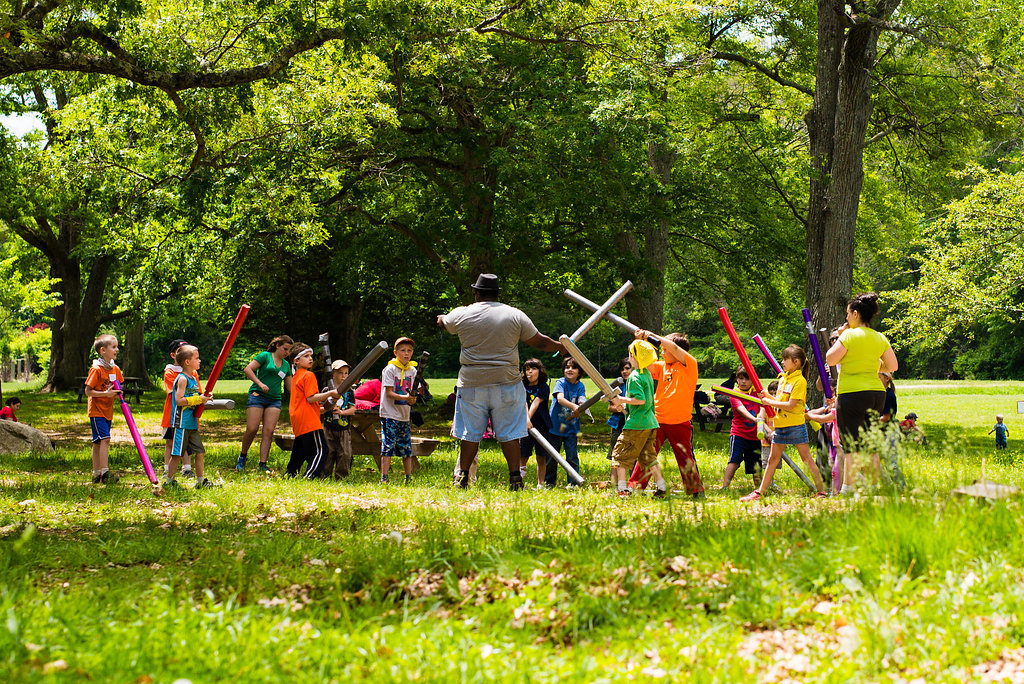
In an EduLarp scenario, participants take on roles within a structured narrative. They might be diplomats negotiating a historical peace treaty, scientists responding to an environmental crisis, or characters navigating moral dilemmas in a fantasy setting. The key difference from theatrical performance is that there’s no script and no audience. Participants make genuine choices within their roles, and those choices shape the outcome of the experience.
The “educational” component means every element serves a learning purpose. The setting, characters, conflicts, and mechanics all connect to specific educational goals—whether that’s understanding a historical period, practicing collaborative problem-solving, or developing empathy for different perspectives.
Here in Fall River, we’ve watched students who tune out during traditional lessons become completely absorbed when they’re negotiating as Roman senators or investigating mysteries as detectives. The shift isn’t about making learning “fun” in a superficial way. It’s about creating conditions where learning becomes necessary, meaningful, and memorable.
The Learning Science Behind EduLarp
EduLarp works because it aligns with how humans actually learn best. Cognitive science shows that we retain information more effectively when we encode it through multiple pathways—not just hearing or reading, but doing, deciding, and emotionally engaging with content.
When a student reads about the causes of World War I in a textbook, they process it as abstract information. When they participate in an EduLarp recreating the complex web of alliances, territorial disputes, and diplomatic failures, they experience the tension of those competing interests firsthand. They feel the pressure of difficult choices. They understand viscerally how small decisions cascaded into catastrophe.
This type of experiential learning creates what educators call “desirable difficulties”—challenges that require effort and engagement, which actually strengthens memory and understanding. In EduLarp, students can’t passively absorb information. They must actively apply concepts to navigate situations, which deepens comprehension and retention.
The social dimension matters too. EduLarp inherently involves collaboration, negotiation, and communication. Students learn from each other’s approaches and perspectives. A quieter student might discover their talent for strategic thinking. A student who struggles with traditional academics might excel at reading social situations and building alliances.
Research on embodied cognition shows that physical action enhances learning. When students physically move through a quest scenario or gesture while explaining their character’s reasoning, they create stronger mental associations than they would sitting still. The body becomes part of the learning process.
Beyond Content Mastery: Skills That Transfer
While EduLarp excels at teaching content—history, literature, science concepts—its most powerful impact often comes through skill development. These aren’t skills that appear on standardized tests, but they’re the ones that determine success in college, careers, and life.
Critical thinking develops naturally when students must evaluate situations, consider multiple perspectives, and make decisions with incomplete information. There’s no teacher providing the “right answer” in the moment—students must reason through problems themselves.
Communication skills flourish because EduLarp requires constant articulation of ideas, negotiation of conflicts, and collaboration toward goals. Students practice speaking persuasively, listening actively, and adapting their communication style to different audiences and situations.
Emotional intelligence grows through role-taking. When you embody a character with different values, backgrounds, or motivations than your own, you practice perspective-taking in a deep way. You don’t just intellectually understand that people have different viewpoints—you experience what it feels like to hold those viewpoints.
During our Quest! Live Roleplaying programs, we’ve seen students develop leadership capabilities they didn’t know they had. Given responsibility for a team’s success within the game world, they discover they can organize others, make tough calls, and take initiative. These lessons transfer directly to group projects, sports teams, and eventually workplace collaboration.
EduLarp Across Subject Areas and Age Groups
One of EduLarp’s strengths is its flexibility. The approach adapts to virtually any subject and age group.
For younger children, EduLarp scenarios tend to be simpler and more structured, with clear roles and objectives. A mythology-themed program might have students take on the roles of Greek heroes completing labors, learning about ancient stories while practicing problem-solving and teamwork.
Middle school students can handle more complex scenarios with competing goals and moral ambiguity. They might participate in a settlement simulation where different factions have legitimate but conflicting interests, learning about historical periods while grappling with questions about fairness, resource allocation, and compromise.
High school students can engage with sophisticated content through EduLarp. They might explore philosophical concepts by role-playing ethical dilemmas, or understand scientific processes by embodying parts of an ecosystem and experiencing how changes ripple through interconnected systems.
The approach works across subjects too. Language arts teachers use EduLarp to bring literature to life—students don’t just read about characters’ choices but must make those choices themselves. History teachers recreate pivotal moments where students experience the complexities that textbooks reduce to a few paragraphs. Science teachers design scenarios where students must apply concepts to solve problems, from diagnosing diseases to engineering solutions to fictional crises.
We’ve run programs teaching everything from conflict resolution to creative writing through EduLarp frameworks. The common thread is that students engage with material actively rather than passively, making the learning stick.
Implementation: Starting Points for Educators and Parents
If you’re intrigued by EduLarp but wondering how to actually use it, the good news is that you don’t need elaborate props or extensive training to begin.
Start small. Even a fifteen-minute role-play where students take on perspectives different from their own counts as EduLarp. A history class might spend ten minutes as delegates to the Constitutional Convention debating a single issue. A literature class might pause mid-book and have students role-play a conversation between characters, exploring their motivations and conflicts.
Structure matters more than spectacle. Clear learning objectives, defined roles, and meaningful choices create effective EduLarp. You don’t need costumes or sets, though simple props can enhance engagement. What you need is a scenario where students must apply knowledge or skills to navigate a situation.
Debriefing is essential. The learning happens both during the experience and in the reflection afterward. Good EduLarp always includes time to step out of character, discuss what happened, and connect the experience to broader concepts. This is where students articulate insights, ask questions, and synthesize learning.
For parents, look for programs that incorporate these principles. Watch for education experiences that prioritize active participation over passive consumption, that give students meaningful choices rather than scripted activities, and that include reflection and discussion as part of the process.
Why EduLarp Matters Now More Than Ever
We’re preparing students for a future that will require adaptability, creativity, and collaboration in ways we can’t fully predict. Traditional education models designed for industrial-age needs don’t always develop these capacities.
EduLarp addresses this gap. It teaches students to navigate ambiguity, because scenarios don’t have single right answers. It builds comfort with complexity, because situations involve multiple competing factors. It develops agency, because students make meaningful choices and experience consequences.
Perhaps most importantly, EduLarp rekindles the intrinsic motivation to learn that many students lose in traditional educational settings. When learning feels relevant, engaging, and empowering, students lean in rather than tune out.
Here in Southeastern Massachusetts, we’re seeing how these approaches create transformative experiences for young people. Students who participated in our immersive programs years ago still talk about specific moments, choices, and insights from those experiences. They’ve internalized lessons in ways that transcend memorization.
Finding EduLarp Experiences
If you’re looking for opportunities for your child to experience EduLarp, consider programs that emphasize immersion, choice, and meaningful challenge. Look for experiences where students take on roles with agency, face genuine decisions, and work collaboratively toward goals.
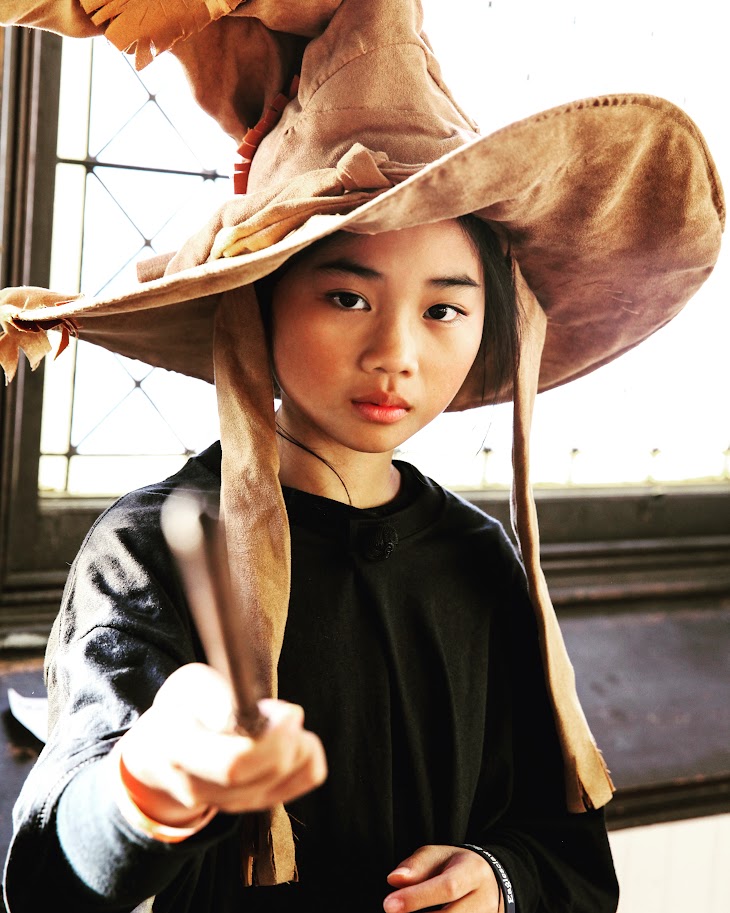
At Mastermind Adventures, EduLarp principles inform everything from our Camp Mythos programs exploring mythology through quests and challenges, to our wizarding school experiences where students navigate houses, learn magical systems, and face moral dilemmas. These aren’t just themed activities—they’re carefully designed educational experiences using LARP as the delivery mechanism.
The most important thing is finding programs that respect both the “edu” and the “LARP”—that take learning objectives seriously while also honoring the power of immersive role-play. When both elements work together, the result is education that students don’t just complete but genuinely live.